


The Nemi Master Plan
Do for hardware what LLMs did for software.
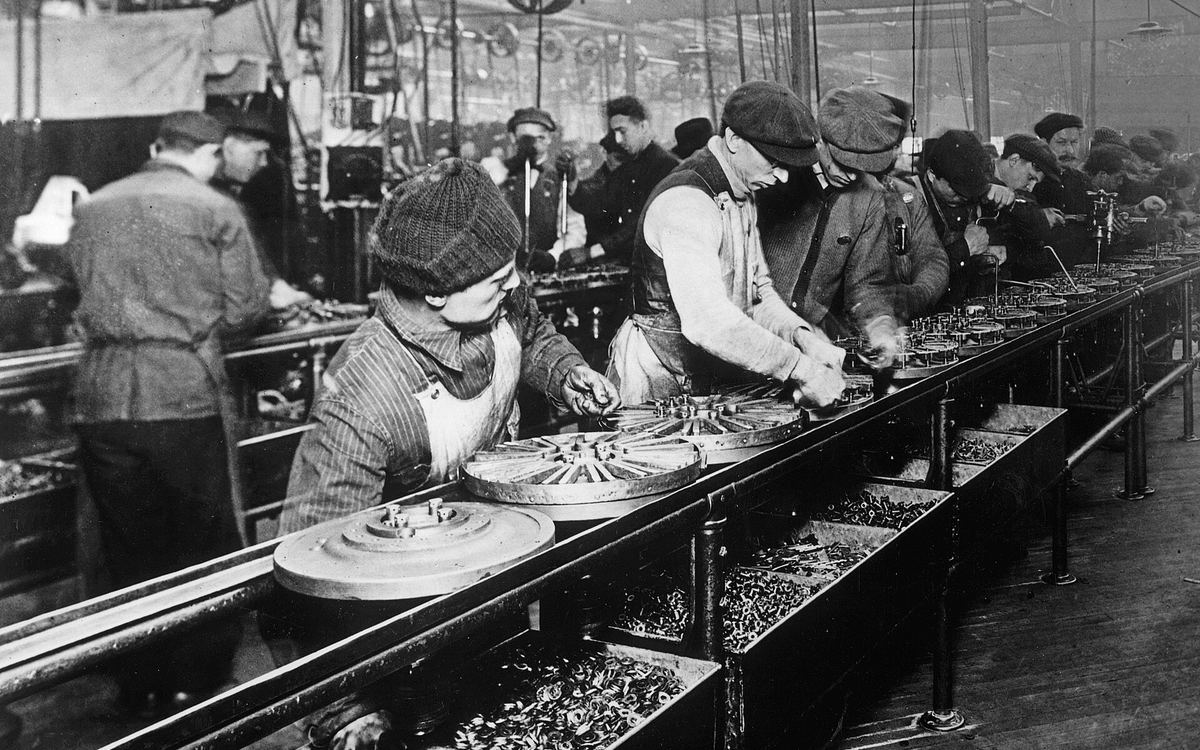
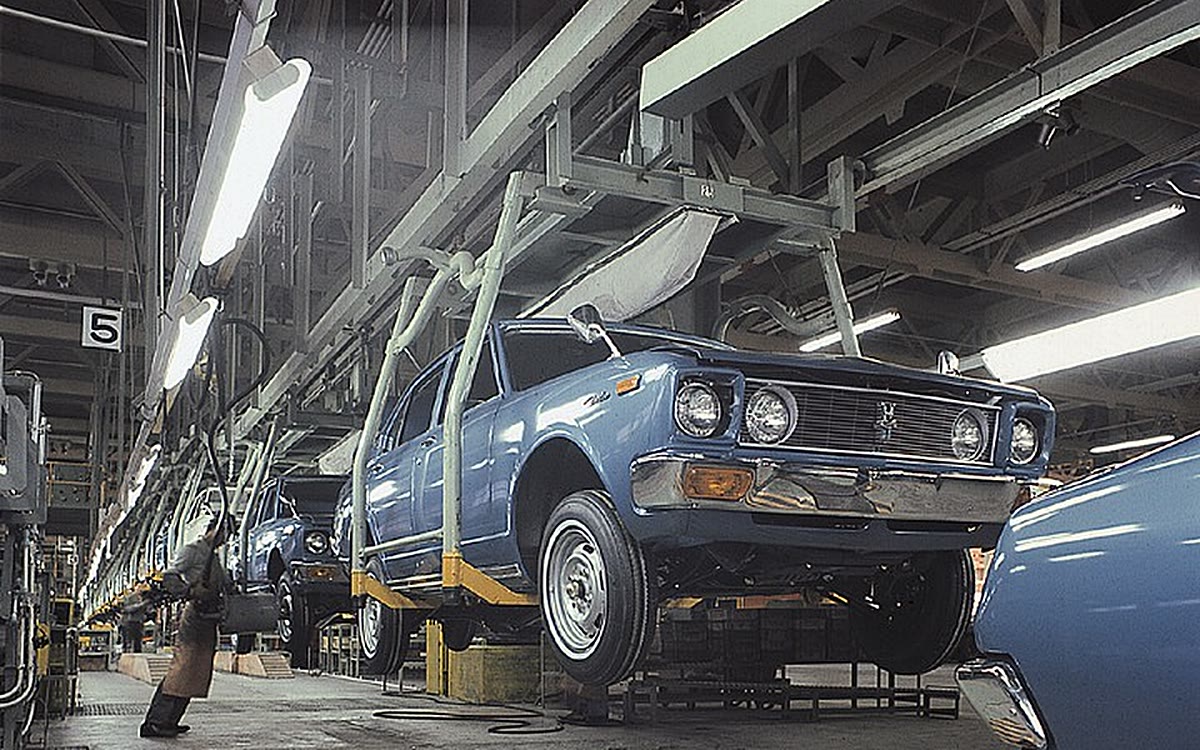
Every few decades, the way we make things changes completely. Ford revolutionized manufacturing with the assembly line in 1913. Toyota did it with the Toyota Production System in 1950. Computing and digitization brought in new levels of efficiency from the 1990s onward. Each shift moved enormous market share to the companies that adopted the new method, away from the ones that did not.
We are now at the start of the largest of these shifts. Software has already had its moment: a single person can envision, develop, and ship products that once took hundreds of engineers years to build — a 100×+ gain in productivity thanks to AI. Hardware is yet to have that moment. Making physical things is still slow — it is still considered normal for a part that takes a month to design and a year to tool or a product to take years and millions to reach production.
NEMI exists to change that.
I want a world where hardware can be shipped as fluidly as software — where a small team, or eventually a single person, can will a complex physical product into existence. We are building the system that makes this possible: the Large Manufacturing Model (LMM), a stack of interconnected AI tools, hardware, and applications that runs the entire arc of a physical product, from idea through production to field feedback. The goal, stated simply, is: do for hardware what LLMs did for software.
However, hardware is harder than software, so the path has to be different. Here is the plan.
The problem
Two facts shape everything we do.
First, all hardware is built from the same handful of building blocks — mechanical parts, electronics, batteries, motors and actuators, HMIs, sensors, and software that ties them together. A drone, a humanoid, an EV, a phone: each is some combination of these. And every product moves through the same four stages that we acronym NEMI — eNvision (idea to concept), Engineer (concept to engineering), Manufacture (engineering to manufacturing), and Improve (the loop that feeds field learning back into the next design). To automate hardware, you have to cover every building block (the full stack), and across every stage (end to end). That is a large matrix, and each cell in it (say, automating the engineering of batteries) is a company's worth of work on its own.
Second, data for hardware doesn't exist in the open. Hardware is mostly proprietary and closed — there are no large public datasets. The knowledge lives in silos in companies that will never let outsiders train on it. A pure software company cannot get this data. Whoever intends to automate hardware has to be inside the factory.
That second fact is the entire reason NEMI is built the way it is.
The plan: be the manufacturer
The only way to get the data and prove the automation is to manufacture — and that is exactly what we do. Today NEMI runs Fortress Factories in India — over 300,000 sq ft, full-stack across batteries, motors, electronics, metals, plastics, tooling, and complex assemblies — and we sell that capability to customers as Manufacturing-as-a-Service (MaaS). We built and hardened these capabilities on our own EV business, then opened them to outside customers and are now working with several large enterprise customers.
Full-stack we can offer on day one. End-to-end automation has to be earned in phases. Here is how we get there.
Automate the Easy Part First: eNvision + Engineer
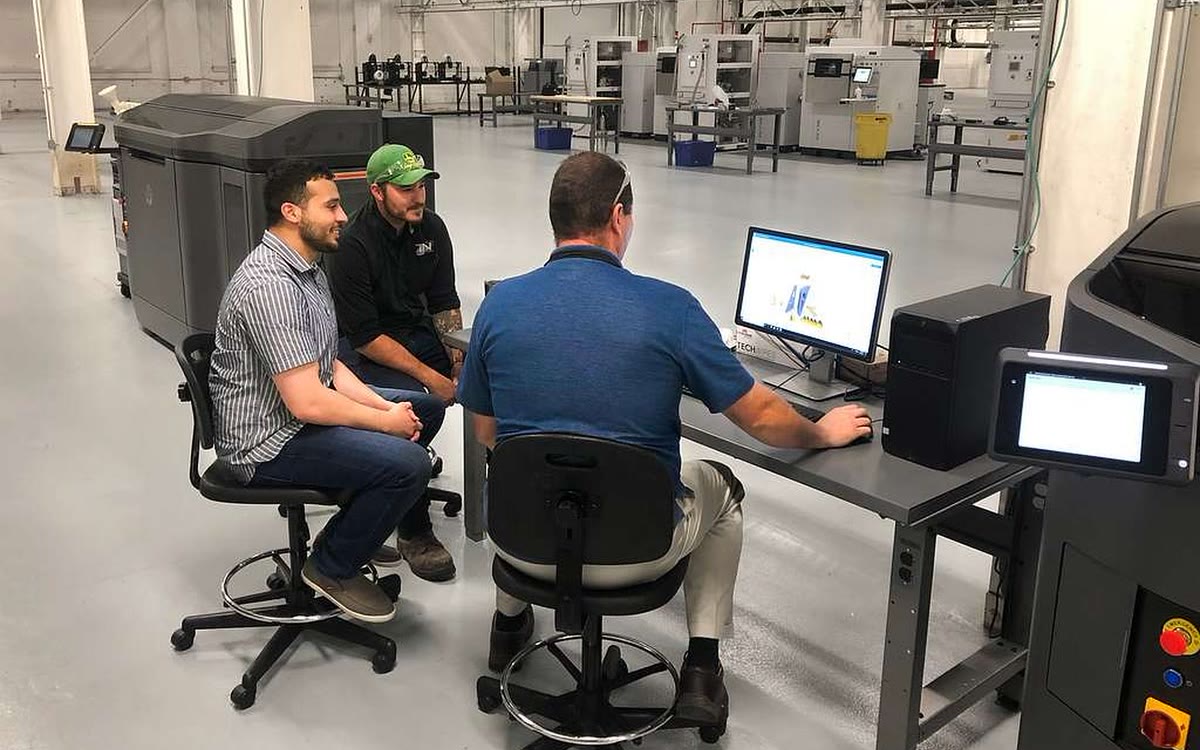
Every hardware design runs on the same tools: rendering, mechanical and electronics CAD, simulation, and PLM. We have rebuilt these in-house with generative capabilities inside, because the existing tools are closed and restrictive to automate on top of. Each part we design becomes usable data and reference for the next one. For example, we have built a massive library of various lithium-ion cells which we can use to assemble into new battery pack configurations, simulate thermally, and finish as a complete electromechanical design. We hold a library of battery management systems designs we can adapt to a new pack in a fraction of the usual time. Every battery project we take on makes the next one more automatic — until the design is done entirely by the machine. Repeat that across every component type, and you have an engine.
When design is automated, the natural market is high-mix, low-volume work, where engineering cost dominates — aerospace, defense, space, high-end automotive, medical, and energy. These constitute a very large market size within the physical economy, and only a fraction of it has to move for this to be enormous. We win because our compression of time and cost wins business traditional manufacturers cannot compete with.
To gather data fast, we have to grow fast. So we buy manufacturers already serving these customers. Each acquisition does three things at once: it generates cash, it hands us proprietary data that sharpens the LMM, and it widens our reach. In each acquisition, we install the LMM and automate to reduce costs and increase speed → this helps us quote more aggressively and win more business → winning more business helps generate more data for the LMM and improve automation → improved automation helps reduce cost further and win more business. This is the loop. In addition, we can bring in the full stack of capabilities to quote on a larger opportunity set. This is not theoretical — our MaaS business was built from such an acquisition 2 years ago.
Automate the Physical World: Manufacture
Running our own factories tells us precisely where automation pays off, so that is where we build next. The key tool in this layer is a digital-twin ERP that captures what is happening on the floor almost automatically — through cameras, phones, and sensors — and acts as an orchestration brain: first telling human operators what to do, then directing the robots.
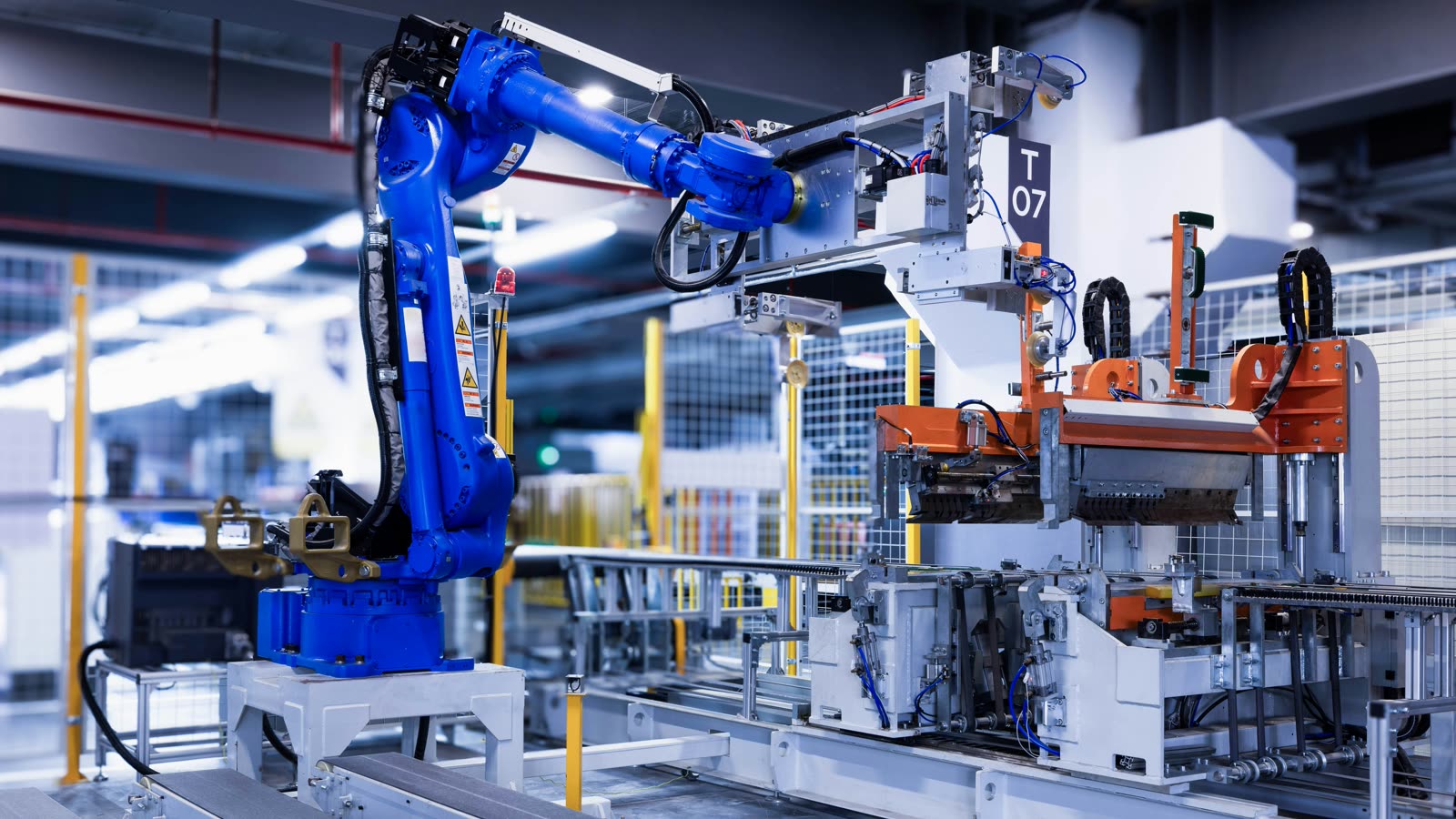
On the floor, we build robotics by ROI, not by hype. Humanoids are overkill. Most tasks need one or two arms, and a static arm costs a fraction of humanoids — so the arm pays back far faster. Add tooling and fixturing automation from phase 1, autonomous movers for material handling, vision and arm-based systems for inspection, and that covers most of a factory. The leverage is this: we use the design automation from Phase 1 to build the Phase 2 robotics quickly and cheaply.
With Manufacture automated, we move into high-volume, low-mix work — consumer electronics, automotive, and beyond. That is a market larger still, and again, lower cost and shorter lead times make the business easy to win.
At the end of Phase 2, I believe even cellphone manufacturing can be moved back to the US. Something like this may sound unviable now, but electronics concentrated offshore for two reasons: cheap labor, and dense supplier clusters. Automation erodes both. The labor-arbitrage disappears, and a full-stack automated operation internalizes the steps that once required that supplier base. The advantage shifts to whoever automates best. We intend to make that real within five years.
Open the Platform
As the LMM matures across Phases 1 and 2, design becomes nearly autonomous, our factories become reconfigurable for almost any product, and we can open the tools and the factories as a platform for others to build on.
That unlocks essentially all of hardware manufacturing — the entire $16T+ physical economy. It plays out the way foundation models did in software: companies running on the LMM will be so much faster and cheaper that adopting it stops being a choice and becomes the price of staying in the game. And convergence will be stronger than it was in software: winning demands full-stack manufacturing, proprietary data accumulated at speed, and — in place of AI data centres — rapidly reconfigurable Fortress Factories around the world. At that point the paradigm has shifted, and we will have built it.
The vision is not a binary bet
The vision is large and genuinely complex — full-stack and end-to-end, every cell in the matrix is a hard problem. Ambitions this size are usually a single, low-probability bet.
However, we do not see it this way and here is why: MaaS is profitable on its own. Winning in manufacturing comes down to cost, quality, and speed — and automation makes us better at all three. High-mix, low-volume work is high-margin and throws off real cash. With automation, low-mix high-volume can also generate margins and cash. That cash helps fund the LMM, the capacity, and the next acquisition. The ambition is not a single, fragile bet — it builds on top of a business that already works.
If we are fully right, we have more than a good business — we have launched the next industrial revolution. Hardware is commoditizing faster and faster: it took decades to commoditize the automobile and under five years to commoditize the smartphone. The LMM bends that curve further and captures the value as it bends.
So, in short, the master plan is:
- Run our own full-stack factories and sell Manufacturing-as-a-Service — profitably, today.
- Automate eNvision + Engineer first; win high-mix, low-volume work in aerospace, defense, and high-end industry; buy factories to compound data and cash.
- Automate Manufacture; bring robotics and orchestration to the floor; move into high-volume manufacturing.
- Open the LMM as the platform every hardware company runs on.
Every manufacturing company will eventually run on AI. We want to help them get there.
We would be glad to have you build the future with us.